
Last updated: 24 November 2026
How does a dry toilet work? Detailed guide
A dry toilet works without water and without chemicals. A urine diverter sends urine into a separate container, while solids fall into a bag with hemp litter that binds moisture and reduces odours. On every camping trip, one practical question comes up: how do you use the toilet on the road? This is where a dry toilet comes in. In this guide, we explain how composting toilets work.
At a glance
- A dry toilet works without water and without chemicals.
- A urine diverter directs urine into a container, while solids fall into a solids container lined with a bag and litter.
- Keeping liquids and solids separate greatly reduces odours.
- Dispose of urine in a standard toilet and put solids in household waste, sealed securely.
- A separating toilet also works well during periods or with an upset stomach.
What is a dry toilet?
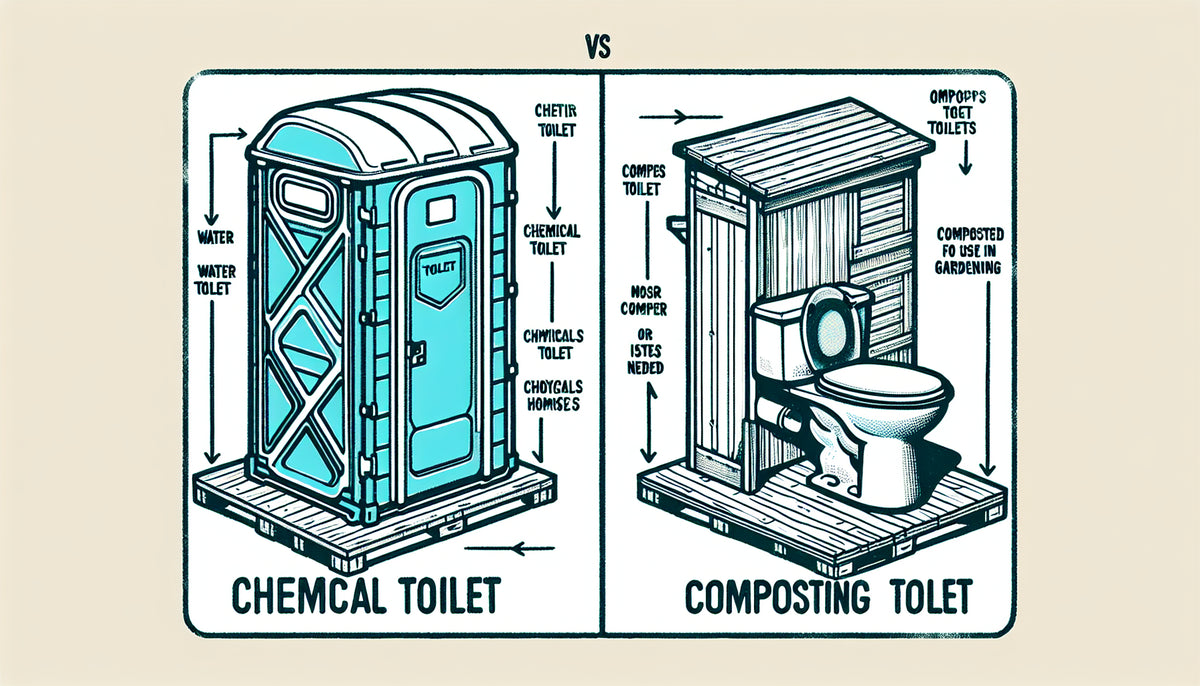
A dry toilet (also called a separating toilet or composting toilet) is a toilet that works without water, collecting solids in a dedicated container separate from urine. In places without a sewer connection, it provides a low-odour and cost-effective alternative to a chemical toilet. You need no flush water and no sanitary chemicals. A chemical toilet, by contrast, uses flush water and sanitary chemicals in a cassette that you empty at a disposal point.

Tip: Which portable toilet is best for your setup? Read more in our article "Camper toilet: using the toilet while travelling in a motorhome".
What are the parts of a separating toilet?
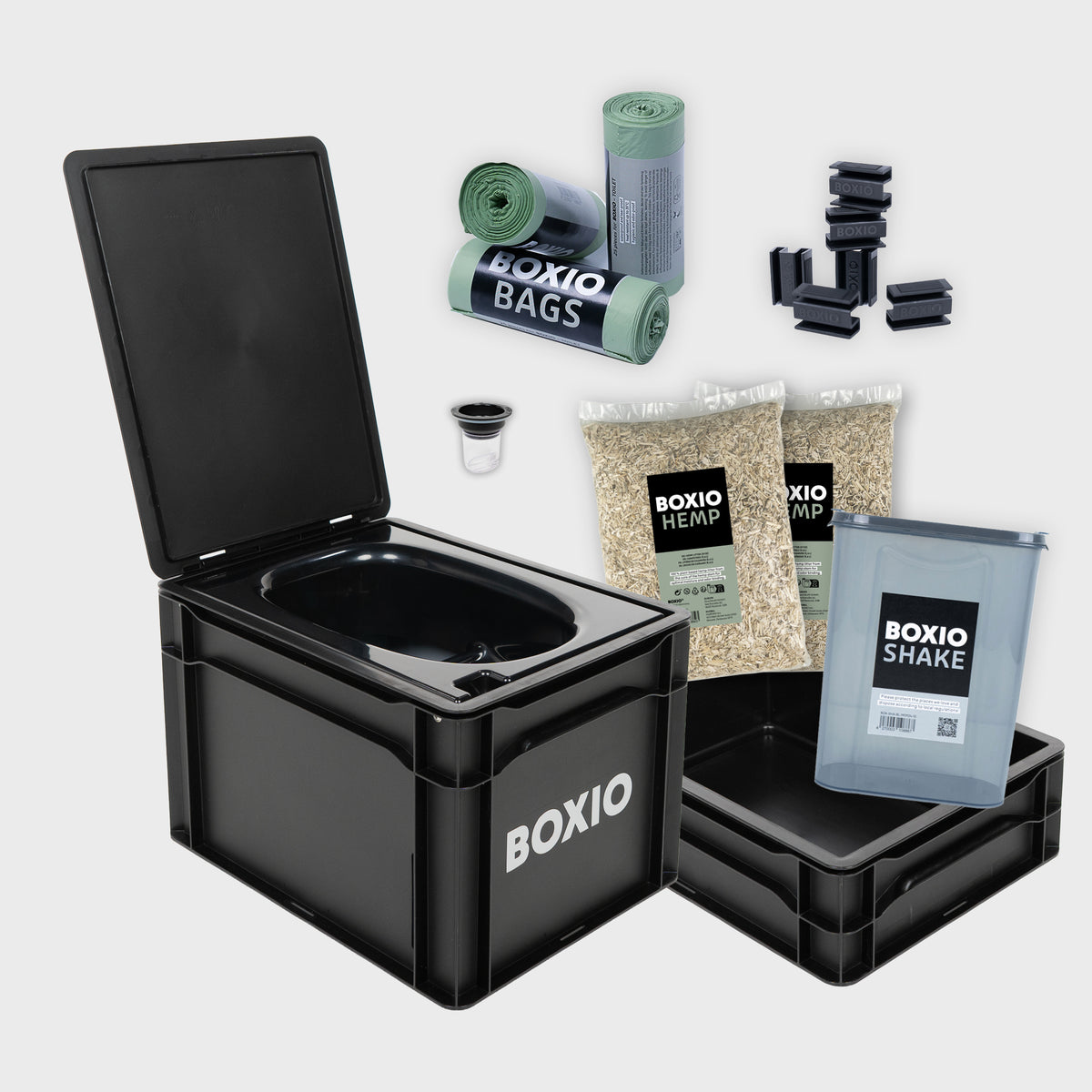
A classic dry toilet consists of three main parts: the urine diverter, the solids container and the urine container. In addition, you need everyday supplies such as compostable bags and litter for solids.

(1) Urine diverter
The urine diverter separates solids and liquids. We tested 7 different prototypes until we and many test users were happy with the result. For cleaning, simply lift the diverter out of the box and rinse it clean. A mild cleaner works well for this.
(2) Solids container
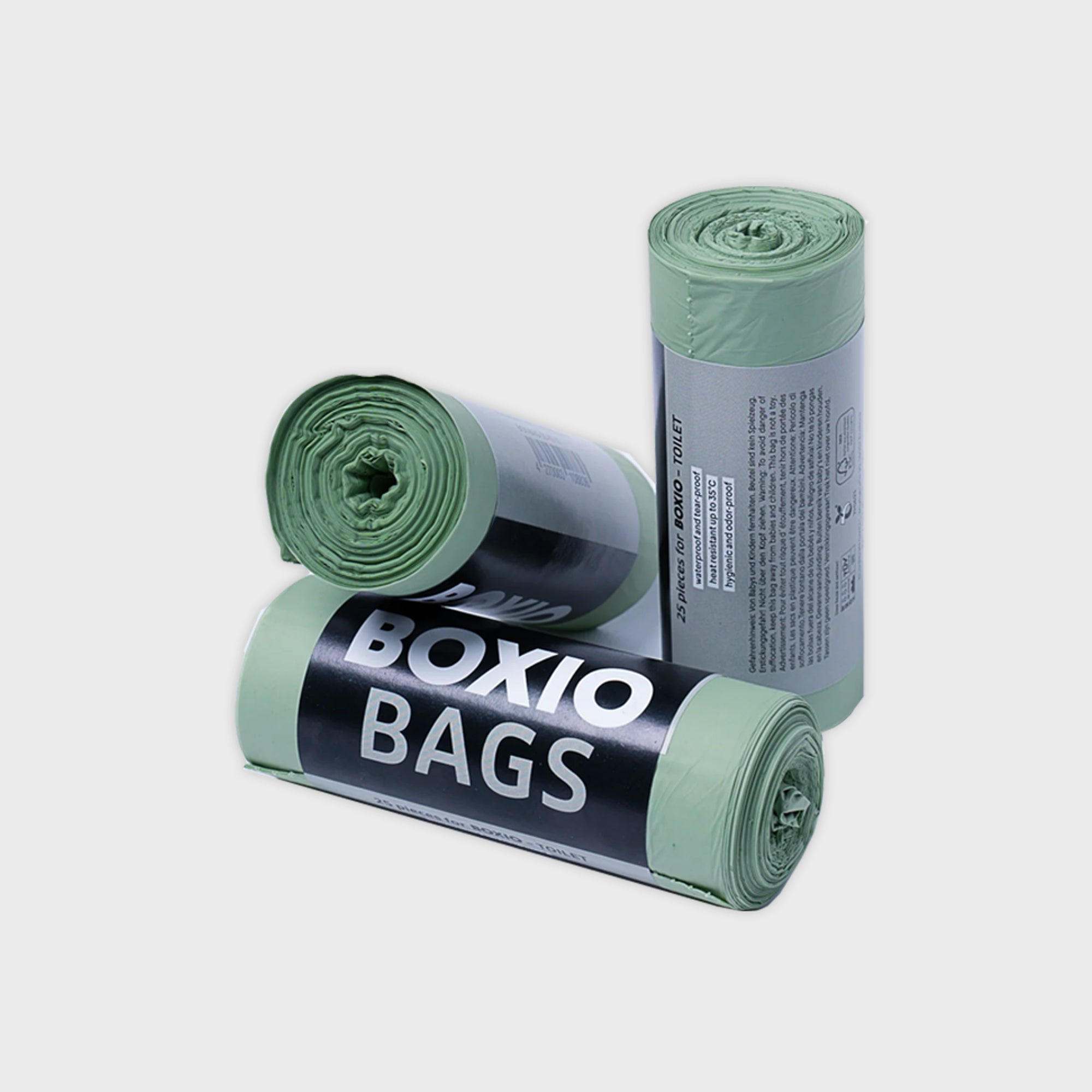
The solids container collects solids. It holds a bag that you replace every 2 to 3 days, depending on use. After each use, add a little hemp litter. This binds moisture and reduces odours. Tie the full bag securely and dispose of it with household waste.
(3) Urine container
The urine container collects urine separately from solids. Empty it every 2 to 3 days so that no unpleasant odours develop. On the BOXIO TOILET with the new Eurobox, you can see the fill level directly from the outside. For the container in the BOXIO TOILET, there is also the BOXIO SMELL GUARD, a magnetic odour trap that opens during use and closes again afterwards. The SMELL GUARD is included in the BOXIO TOILET MAX+ set.
Dry toilet: how does it work in detail?

The BOXIO TOILET works without water and without chemicals. Here is how to use it step by step.
1. Setup
The BOXIO TOILET consists of the Eurobox with a hinged lid, the urine diverter and the solids container. The mounting set is included.
Tip: In this video, we show exactly where and how to fit the supplied screws.
2. Use
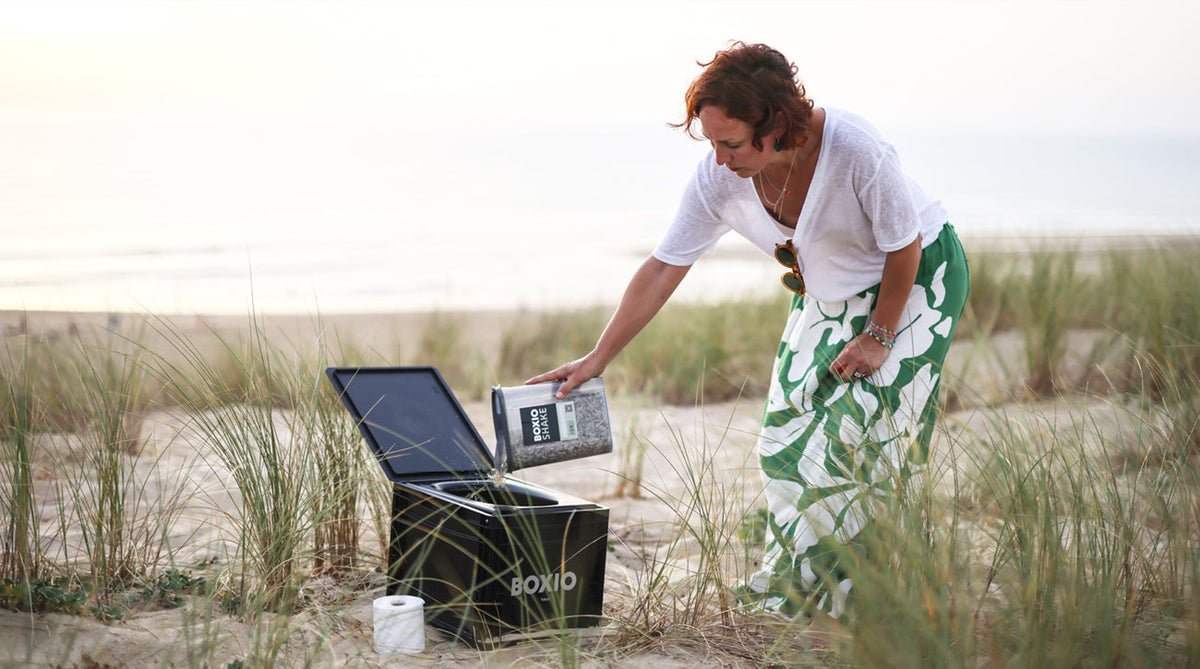
First, fold up the urine diverter and line the solids container with a tear-resistant, compostable bag. Add a handful of hemp litter to the bottom. Check that the urine container sits firmly in place, and you are ready. The urine diverter separates liquids and solids into their respective containers. Always use the toilet while seated so the separation works properly.
3. Disposal
Tie the solids bag securely and put it in household waste. Pour the urine into a regular toilet, for example at a campsite, motorway service station or at home.
Please note: Only dispose of waste at designated points and leave no mess behind. Improper disposal has caused issues with local residents and led to no-disposal signs in the past. Read more in our guide to legal rules and disposal.
4. Cleaning
After emptying, give the individual parts a quick clean to prevent odours. A mild cleaner such as BOXIO CLEAN, a cleaning concentrate for bathrooms and toilets, works well for this.

- New Eurobox with a recessed handle
- Compact in Eurobox format: 40 × 30 × 28 cm
- Lightweight: 2.81 kg
- Hinged lid that stays open
- Fill level visible from the outside; smooth, wipeable surfaces
What issues might women experience with a separating toilet?
Of course, dry toilets are not luxury toilets. Do women face any specific issues when using them?

At first, there may be the occasional challenge, especially if you have never used a dry toilet before. During your period, it also takes a little getting used to at the start. However, these initial hurdles are easy to overcome.
- Aiming: It takes a little practice until urine goes straight into the urine container and solids into the solids container behind it. If you miss a little at first, it is not a problem.
- Menstrual cup: You can use your menstrual cup on the road without any issues. It is best to empty it into the solids container.
- Tampons and pads: Disposable products can go directly into the solids container or into a separate bin.
You can therefore use the separating toilet as usual during your period. It even gives you a private space without having to rely on a public toilet.
BOXIO - BAG BUNDLE | Compostable bin liners
Tip: A dry toilet is often a great help for children too. Find out more in our article “Toilet for the car: how to avoid mishaps on the road”.
Can you use a dry toilet when you have diarrhoea?
Not a pleasant topic, but an important one: does a separating toilet work with diarrhoea? Yes. Because a lot of liquid ends up in the solids container, you should adjust a few things.
- Use more litter: Add considerably more hemp litter to the solids container, both before and after use. The litter absorbs the liquid.
- Change the bag more often: Change the bag more frequently than usual, ideally every day. This keeps odours low and maintains hygiene.
- Double up: Using two bags, one inside the other, gives extra protection in case one soaks through.
- Clean more thoroughly: Clean the urine diverter and solids container after every bag change, and wear gloves while doing so.
- Keep separate when ill: If the diarrhoea is caused by an infection, use a separate solids container if possible to prevent pathogens from spreading.
Conclusion
A dry toilet is a toilet solution without a water flush, offering many advantages especially for vanlife:
- It collects solids and urine separately, requires no water connection, and can be placed anywhere.
- It is simple to use.
- Disposal is straightforward: the bag goes into household waste and the urine into a standard toilet.
Even during your period or with diarrhoea, it remains a practical solution for everyday camping with just a few simple adjustments. If you want everything in one order, the BOXIO TOILET MAX+ includes the BOXIO TOILET, two bags of hemp litter, compostable bags and the BOXIO SMELL GUARD. Do you also need a camping sink? The BOXIO SANITARY set adds the BOXIO WASH camping sink, a mirror, a hand shower and two seat cushions to the complete toilet set. In that set, the BOXIO TOILET MAX+ includes the BOXIO TOILET, two bags of hemp litter, compostable bags and the BOXIO SMELL GUARD.
BOXIO TOILET MAX+ | Separating toilet complete set
Dry toilet: FAQ
How does a dry toilet work?
A urine diverter separates solid and liquid waste into separate containers. Solids are covered with litter to reduce odours, while urine is collected separately.
Is a dry toilet the same as a composting toilet?
Yes. A dry toilet with a urine diverter is also called a separating toilet or composting toilet. It collects urine and solids separately and works without water or chemicals.
How do you use a dry toilet?
- Sit down as you would on a standard toilet.
- Put toilet paper into the solids container.
- Cover solids with hemp litter.
Where do you dispose of urine from a dry toilet?
The urine collects in the container beneath the urine diverter. Once it is full, you empty it into a standard toilet, for example at a campsite or a service station.
Where does toilet paper go in a separating toilet?
Toilet paper goes into the solids container. You can use standard toilet paper. At the end, the sealed bag and its contents go into the household waste.
How does a dry toilet work in a motorhome?
Just like anywhere else: it separates solid and liquid waste into separate containers, while litter binds moisture and odours. Because it requires no water or power connection, it also fits into campervans without a built-in bathroom.